One lens. One city. A different way of seeing.
A simple assignment for finding a visual rhythm without changing your equipment.
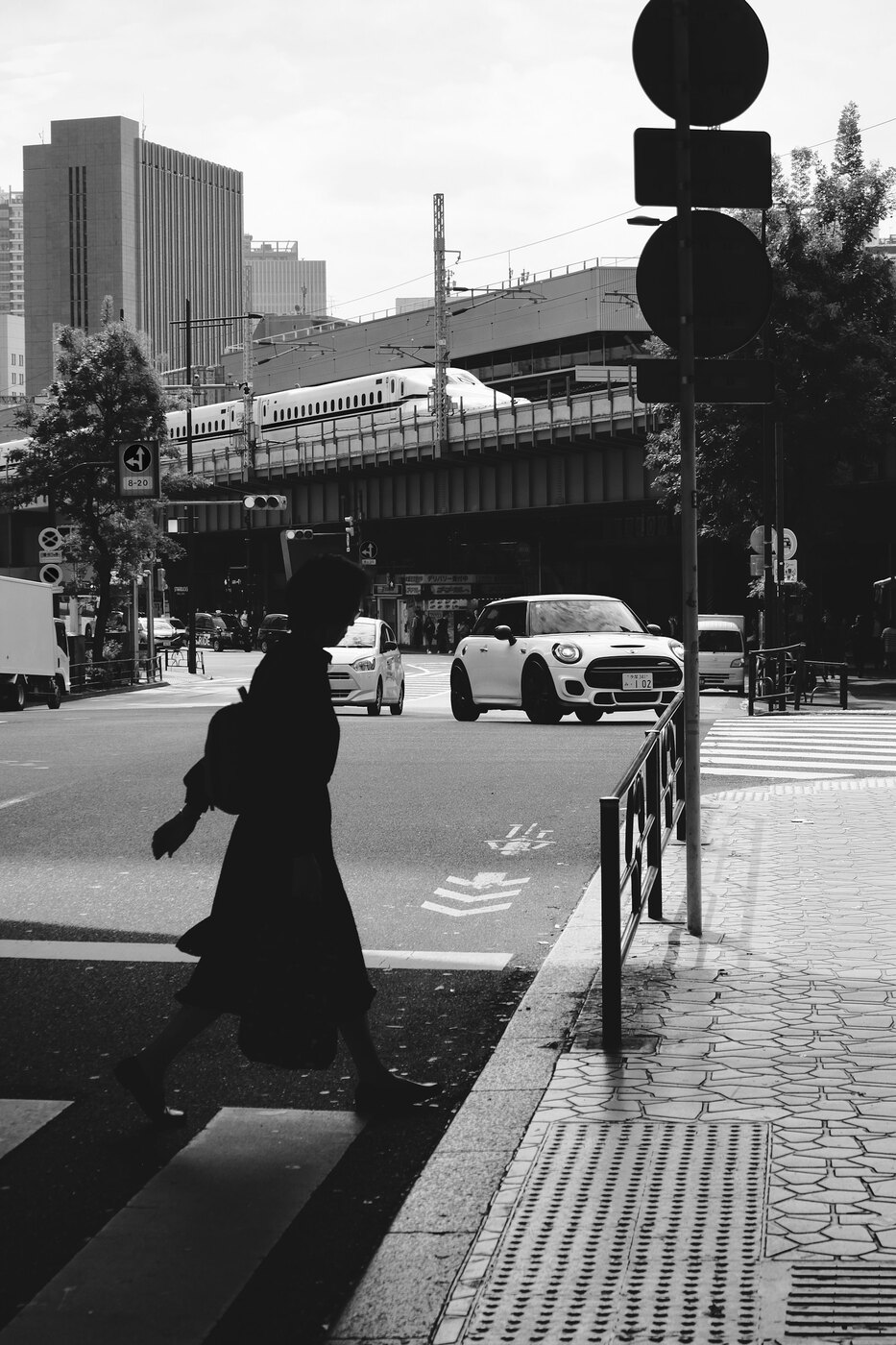
Working with one focal length gives your walk a useful constraint. After a while, you begin to anticipate the frame before raising the camera. The point is not to prove that one lens is better. It is to reduce the number of decisions between noticing and making a photograph.
Set a route, not a shot list
Pick a route you can repeat in under an hour. Use the lens you already know, or set a zoom to one position and leave it there. Make a wide scene, a closer observation and a detail. Try to connect the three with light, gesture or color rather than subject alone.
If something will not fit, consider whether moving is appropriate before stepping closer. Respect people’s space and the rules of the place. Sometimes the useful decision is to let a frame go.
Repeat the walk
Return at another time of day. Which backgrounds have changed? Where does the light now fall? Familiarity makes it easier to notice differences. Keep both edits, with the date and time attached, so you can compare your decisions.
Finish with six photographs, not sixty. Give the sequence a beginning and an ending. A small, deliberate edit is often a more revealing record of a walk than a folder full of near-duplicates.
Choose a constraint you can actually keep
A useful exercise should remove decisions without making the day impractical. If you own only a zoom, choose one marked focal length and leave it there. If a phone is your everyday camera, use one of its normal capture views rather than constantly changing magnification. The value lies in becoming familiar with a consistent frame, not in purchasing equipment that makes the assignment look more authentic.
Before leaving, describe the angle of view you expect to work with. Will it include the street around a person, or encourage you to isolate a smaller detail? Keep that expectation provisional. The walk may show that you naturally stand farther away, or that you repeatedly want more context. Those observations are useful evidence about your habits, even when the resulting photographs are not immediate favorites.
Make distance a conscious decision
Using your feet changes more than how large a subject appears. Moving also changes the relationship between foreground and background. Before stepping forward, look at what will disappear from the edges and what will begin to overlap. Do not treat moving closer as an automatic improvement. A wider relationship may explain the place more clearly than a tighter view of the apparent subject.
Choose a stationary object and make three frames from different positions while keeping the same focal length. Review the background as carefully as the object. This exercise gives you a practical memory of how position changes the picture. It can also reveal when the most useful movement is sideways rather than forward, particularly where a small shift separates elements that seemed inseparable at first.
Find a route with several kinds of space
An effective route does not need landmarks. A market entrance, a narrow passage, an open square and a bus stop can offer enough variation. Look for transitions between spaces rather than traveling as far as possible. Those transitions encourage you to change how you organize a frame while keeping the equipment constant. They also make the route easy to repeat under different conditions.
Keep the logistics modest. Plan for weather, access and a sensible place to pause. If the route depends on rushing to reach a particular view before the light disappears, it may defeat the observational purpose of the exercise. Leave room to stop somewhere unexpected. You are building a relationship with a place, not proving that you can cover the most ground with the smallest camera.
Photograph a relationship, not just a category
It is easy to return with one architecture picture, one person and one detail. Those categories provide variety, but they do not automatically form a sequence. Look for connections you can describe: an enclosed space followed by an opening, a repeated gesture, a color appearing at different scales. A series becomes more interesting when each image changes how you read the one beside it.
Try writing a brief for yourself that names a relationship rather than a subject. “Where people pause” gives you more to investigate than “street photography.” It can include a doorway, a waiting person, an abandoned cup or a shaded bench. The constraint remains broad enough for surprise while giving the eventual edit a reason to hold together beyond sharing a location.
Keep people larger than your exercise
Your assignment does not require strangers to participate. Notice signs that a person does not want to be photographed, respect requests and follow the rules of the location. If a conversation is appropriate, explain what you are making without turning consent into a hurried ritual. An exercise in seeing should improve your awareness of people as well as your awareness of light and shape.
Be equally careful when writing about the pictures. A momentary expression is not reliable evidence of a stranger’s emotional life. Avoid captions that turn an observed gesture into an invented personal story. You can describe what is visible and still leave room for uncertainty. That restraint often gives a photograph more dignity than an overconfident explanation does.
Edit in two different passes
Make the first pass for individual images. Which frames hold your attention after the memory of taking them has faded? Make the second pass for the sequence. Which images connect, complicate or create useful pauses? Keep the two selections separate. A strong isolated picture may not belong in the final series, while a quieter frame may be essential to its rhythm.
Use a consistent viewing size so that scale does not decide the edit for you. Then compare the sequence at a smaller size, as it might appear in a modest gallery or booklet. If the relationships disappear, investigate why. The answer may involve image order, repetition or insufficient visual variety. Changing the lens is not necessarily the most useful response to an editing problem.
Repeat, then change one variable
Walk the route three times before judging the exercise. Keep the focal length and basic brief consistent, but note changes in light, activity and your own expectations. On the final edit, mix the sessions instead of separating them automatically. Look for an image that answers a question raised on another day. Familiarity can reveal connections that a single outing cannot supply.
Afterward, change one variable deliberately. Choose another time, a different route or another focal length, then compare what becomes easier and harder. Your record now contains more than a set of attractive frames. It describes how you respond to space and how a tool influences that response. That is useful knowledge to carry into both personal projects and assignments where you cannot repeat the walk.