Watermarks in the AI era: removal, reconstruction and real protection
Updated for November 2026: how AI can remove visible marks, why a plausible reconstruction is not the original, and where layered protection helps.
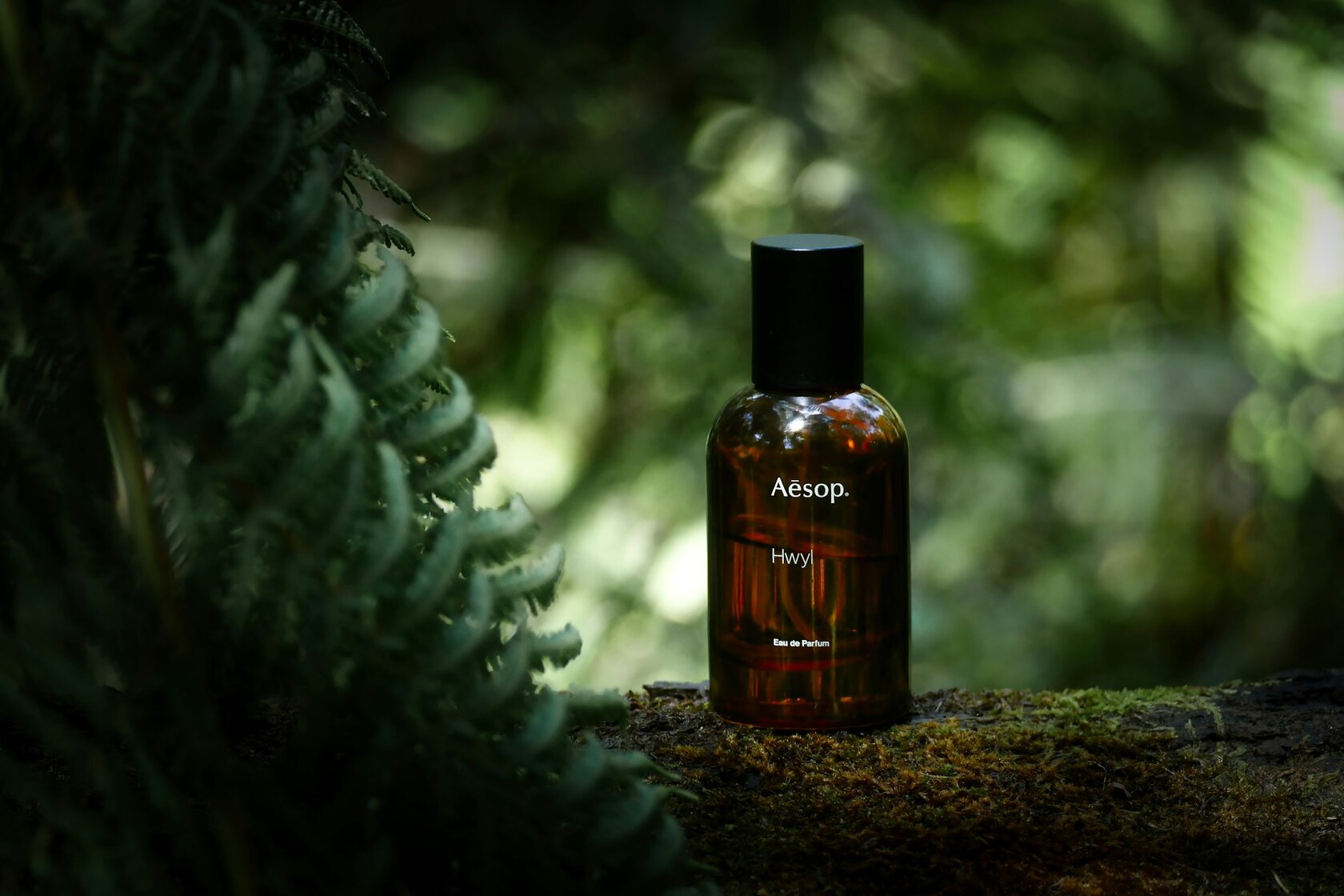
A visible watermark can identify a photographer, discourage casual reuse and make a proof’s status obvious. It cannot guarantee that the image will remain visually marked. By November 2026, published research and mainstream generative-editing tools provide clear reasons to treat a logo as one layer of a workflow rather than an unbreakable barrier. The important change is that removing an obstruction can now involve generating a plausible replacement for the covered scene.
That does not make every watermark pointless, and it does not mean every removal produces an accurate original. Those distinctions matter to photographers deciding what to share and how to conduct client review. This article explains the mechanisms and limits using primary research and vendor documentation. It does not present our own removal benchmark or claim that one design has been certified against every current model.
| Approach | Useful for | Important limit |
|---|---|---|
| Visible watermark | Visible attribution and proofing status | Can be cropped, estimated or visually replaced |
| Invisible watermark | Machine-detectable embedded identification | Robustness and detection depend on the scheme and transformations |
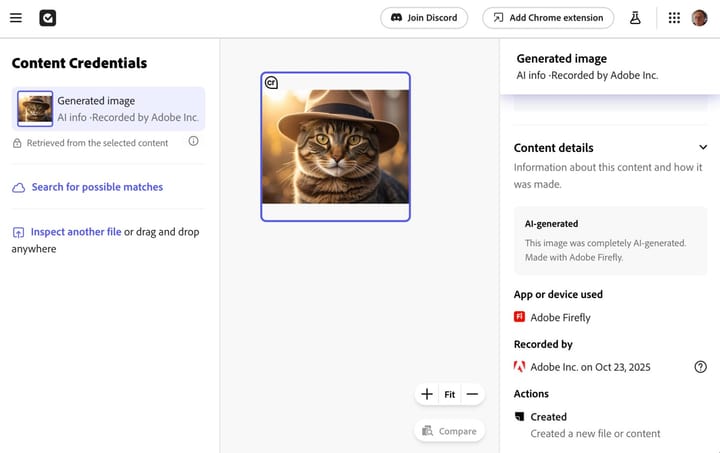
| Content Credentials | Inspecting signed provenance information | Records history; does not prevent copying or prove a caption |
How AI can work around a visible mark
Generative inpainting treats a marked region as an area to be replaced. It uses the surrounding image and learned visual patterns to propose content that fits. A model may continue a wall, approximate fabric or invent part of a face where lettering crossed it. It does not necessarily need the photographer’s clean source file to produce an output that looks convincing at an ordinary viewing size.
A CVPR 2026 workshop paper, MorphoMod, evaluates visible-watermark removal with several inpainting models. Its reported examples show successful removal in many tested cases while also recording unintended artifacts. That is evidence of a practical vulnerability under the study’s conditions. It is not evidence that every photograph, mark and model combination will behave identically, or that an apparently repaired region matches the original scene exactly.
A clean-looking result can contain invented detail
Generative repair can replace uncertainty with plausibility. Fine lettering, product texture, a small reflection or a person’s features may change while the overall image still appears natural. This is why visual removal and faithful restoration are different outcomes. A technically impressive replacement may erase the watermark’s appearance without recovering the precise information that was obscured beneath it.
For photographers, that distinction has two implications. A marked preview can still be misused as a convincing-looking image, so visible interference is not a dependable access control. At the same time, a reconstructed result should not be treated as a trustworthy documentary recovery simply because the obstruction has disappeared. Keep the clean master and the recorded edit history available within your own controlled archive.
Some bypasses predate generative AI
A mark placed only near an edge may be lost through cropping. Other approaches estimate and separate an overlay rather than inventing all the covered content. Google Research’s 2017 work demonstrated how consistent watermarks across a collection could be estimated and removed using information from multiple images. The recurring lesson is that evaluating one isolated preview can miss weaknesses created by the wider collection.
Generative inpainting broadens the problem because a plausible replacement may be sufficient for someone who does not care about exact recovery. Cropping, overlay estimation and generated repair are different mechanisms with different requirements. A mark designed to resist one does not automatically address the others. Avoid turning a single successful test into a general claim of resistance to every form of copying or reconstruction.
Visible marks, invisible signals and provenance serve different jobs
A visible logo is part of the picture people see. An invisible watermark embeds a signal that a suitable detector may recognize. Content Credentials provide signed provenance information through the C2PA framework. These are related tools for identification and transparency, but none should be casually described as a lock that prevents a person from making another visible copy of an image.
The robustness of an invisible scheme depends on its design and the transformations being considered. Provenance information also needs to remain available through the actual distribution route. Inspect the system you use rather than relying on the word “watermark” alone. A missing signal does not automatically prove an image was generated or stolen, and a present signal does not resolve every question about the context of its use.
Design a useful proof rather than an impossible promise
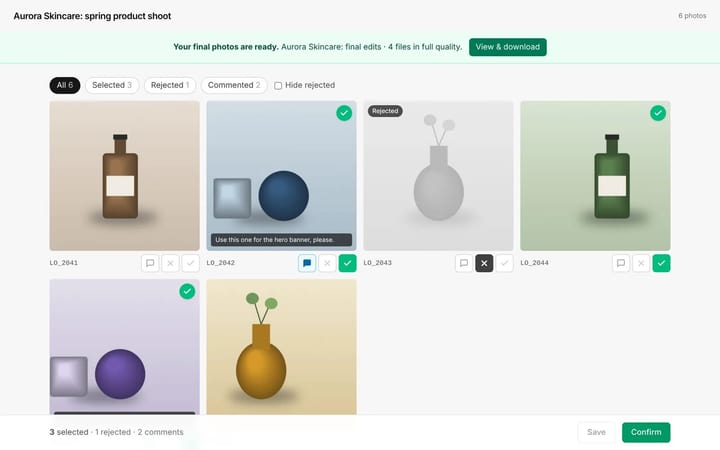
Choose a visible mark that communicates identity or review status without making the client unable to judge the photograph. Placement, coverage and opacity change that balance. A small corner logo is unobtrusive but easy to exclude; wider coverage interferes more with the image and may raise the effort of some removal methods. Greater interference still does not establish universal resistance to generative replacement.
Test representative images you own before adopting a design. Include smooth backgrounds, detailed surfaces and faces if those belong to your work. Evaluate whether the proof remains useful and whether the protection claim matches what you observed. Describe the result narrowly. “This discourages casual reuse in our review workflow” is a more defensible statement than promising a permanently AI-proof preview from a limited demonstration.
Keep the strongest protection outside the public preview
Preserve clean originals and provide review files sized for the actual decision. A smaller preview limits the original captured information you distribute, although generative enlargement can still produce a plausible larger image. Keep final-quality files within an appropriate delivery process and agree when they should become available. This separates the client’s ability to make selections from the circulation of the cleanest version.
Use access controls, appropriate expiry and clear review instructions where they fit the assignment. A download restriction can reduce some convenient copying routes, but an authorized viewer may still capture what is displayed. Revoking a link cannot recall a copy already made. These limits do not make controlled review worthless; they explain why the watermark, access settings and delivery decision should support one another.
Measure the workflow you can actually maintain
Keep records that connect the image to its source, edits and authorized delivery. Use provenance tools where supported, verify how they survive your publishing route and retain a clear archive independently of a temporary gallery. When assessing a protection product, ask which transformations were tested and what success meant: visible survival, detector recognition or preservation of a provenance record. Those are distinct measurements.
The practical conclusion is layered and proportionate. Visible marks can remain useful for attribution and proofing; AI can defeat their appearance in important circumstances. Neither a clean-looking reconstruction nor a reassuring protection label settles the whole question. Protect the master, control the review and delivery process, keep evidence of your work and describe each technical tool according to the job it can actually perform.