World Press Photo opens its next chapter on December 1
The 2027 contest adds recognition for nature and sport. Here are the dates to know.
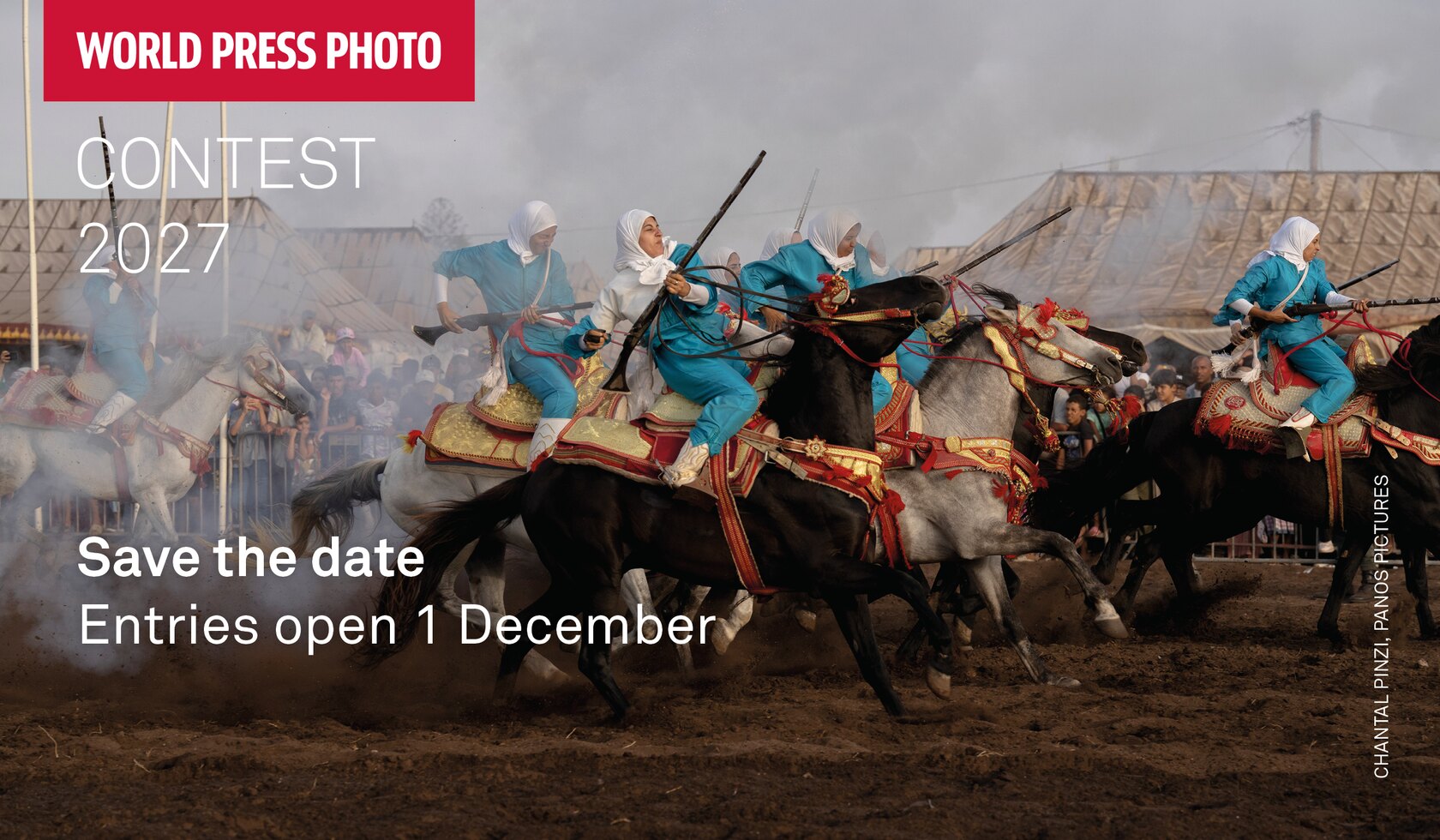
Entries for the 2027 World Press Photo Contest open on December 1, 2026, at 13:00 CET and close on January 13, 2027, at 13:00 CET. The organization says entry is free and open to professional photographers worldwide.
New recognition for nature and sport
Three Nature Awards and three Sports Awards will be selected from eligible Singles and Stories across the contest’s regions. They are not separate submission categories, so photographers do not need to enter a second time for consideration.
Reuters editor Maye-E Wong will chair the global jury. The organization says the full jury will be announced when entries open.
Before you submit
Read the current official rules, prepare accurate captions and check the eligibility of each image. Leave time to gather the original files and documentation requested by the organizers. The source below is the reference for deadlines and any subsequent changes.
Start with a story, not a folder of favorites
The official dates and changes are summarized above. What follows is GOBO’s preparation guide, not a replacement for the contest rules or advice from its jury. A competition entry begins with a harder question than which photographs look strongest in isolation: what does the work allow a reader to understand? Answer that in one plain sentence before assembling a sequence. If the sentence depends on information the images cannot support, the edit needs more thought.
Separate your affection for making an image from its contribution to the story. A difficult journey, a long wait or an emotional encounter can give a frame personal significance that is invisible to a viewer. Invite someone who was not there to describe what they see. Listen for gaps between that description and the account you intended. Those gaps can reveal where another photograph or a clearer caption is needed.
Treat captions as reporting
A caption should identify what you know, not extend the image into a more dramatic narrative. Check names, locations, dates and the circumstances of the photograph against your notes. Distinguish direct observation from information supplied by another person. When a detail remains uncertain, investigate it before submission instead of hoping the visual impact will carry the statement. Accuracy is part of the work, not paperwork added afterward.
Keep an organized record of the sources behind difficult details. A person’s role, the sequence of an event or the identity of a location may seem obvious while you are on assignment and less clear months later. Build a small reporting file alongside the edit. It can help you answer a reasonable question from an editor or organizer without reconstructing your memory under deadline pressure.
Read the eligibility rules before the final export
An image that is suitable for one publication or award may not meet another organizer’s requirements. Consult the current official instructions for eligible work, accepted files, editing limits and documentation. Our article deliberately does not turn those changing requirements into a permanent checklist. Save a reference to the version you used, and recheck it before submitting if the organizer issues an update.
Leave time to locate the originals and any requested supporting material. A finished portfolio export is not the same thing as an organized source archive. Confirm that filenames remain consistent between your edit, captions and original files. If assistants or collaborators have handled the material, make sure the person submitting can trace each selected image through the workflow without relying on somebody else’s private folder structure.
Edit a sequence for information and rhythm
When presenting several images, assign each frame a job. One might establish the setting; another might introduce a person, reveal a consequence or complicate an initial impression. If two frames do the same work, compare them directly. Repetition can create rhythm, but it can also occupy space that a different observation would use more effectively. Do not assume more dramatic images automatically make a clearer story.
Try reading the sequence without its captions, then read it again with them. The first pass tests the visual relationships; the second tests whether the reporting adds necessary context. You are not trying to make words unnecessary. You are checking that neither the images nor the text are being asked to prove something they do not establish. Good editing often makes those limits easier to recognize.
Consider the people represented in the work
An award can bring new attention to a photograph and the people inside it. Think about what that wider circulation could mean, especially when the work involves vulnerability or a changing personal situation. Review the basis on which the photographs were made and any commitments you gave. A competition deadline should not be the reason to stop considering the consequences of publication.
Avoid reducing a subject to an illustration of a theme that is convenient for the entry. Include context that preserves complexity, and be careful about captions that imply motives or emotions you have not established. These are editorial responsibilities regardless of whether a particular form asks about them. The strongest image is not automatically the most responsible choice for every use or audience.
Work backward from the deadline
Give the process several distinct stages: an initial edit, a reporting check, a review by another reader and a final technical pass. Keep a buffer for problems that have nothing to do with photography, such as an interrupted upload or missing account information. Set your own completion target earlier than the official closing time. This is a scheduling suggestion, not a claim about how long any specific entry will take.
Use the final pass to compare the actual uploaded material with your intended submission. Check image order, captions, credits and any declarations carefully. Keep a copy of what you submitted and the confirmation supplied by the platform. These simple records are useful later, particularly when the same project is being considered by editors, exhibitions or other competitions with different requirements.
Let the edit remain useful beyond the result
An entry can become a productive review of a project even when it receives no award. Preserve the tighter sequence, improved captions and questions raised by outside readers. Consider which outlet or audience might understand the work next. Recognition is one possible route to circulation; it is not the only measure of whether a story deserves attention or whether the reporting has value.
The useful outcome of preparation is work you can stand behind: a clear edit, accurate reporting and an honest account of how the images were made. Use the official contest page for rules and deadlines, and use your own editorial judgment for the larger responsibility. A good submission is a carefully presented piece of photography, not simply a persuasive application form.